
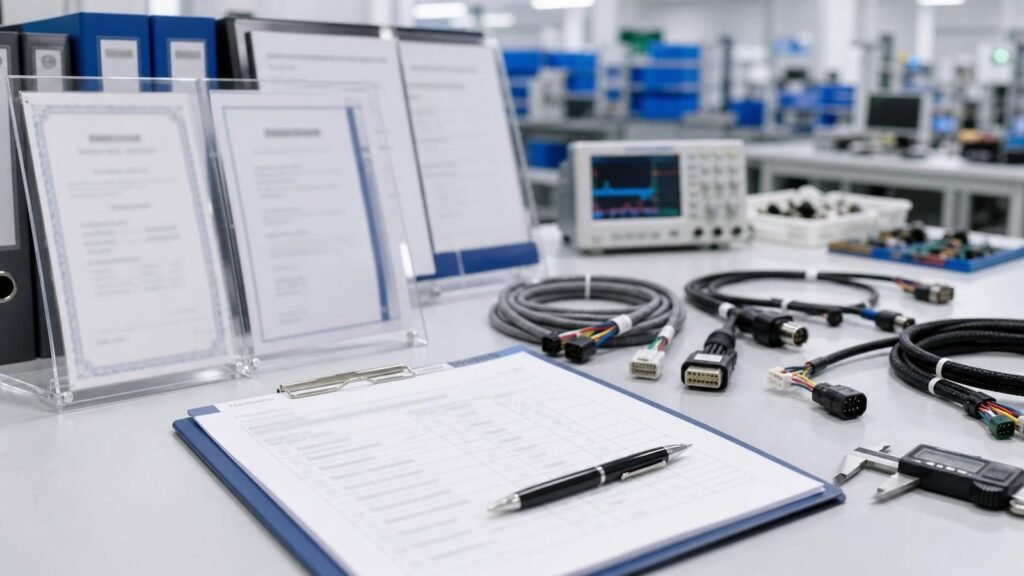
Selecting the right medical cable supplier is one of the most consequential procurement decisions a medical device manufacturer will make. A mismatch in quality systems, certifications, or manufacturing capability can stall regulatory submissions, trigger costly recalls, or create patient safety risks. This guide walks procurement managers and engineering teams through a complete supplier evaluation framework — from baseline certifications and quality controls to commercial terms and the red flags that should end a sourcing conversation early.
What to Look for in a Medical Cable Supplier
The starting point for supplier evaluation is not price. For regulated medical devices, a supplier’s quality management system and documented compliance history matter far more than unit cost at the shortlist stage. Core attributes to assess in any candidate medical cable supplier:
- Documented quality management system — A supplier whose processes are aligned to ISO 13485 standards has established documented procedures for design control, supplier management, lot traceability, and CAPA. Request the current certificate, confirm the scope explicitly covers cable and wire harness manufacturing, and verify the certificate against the issuing body’s public registry.
- Medical-specific manufacturing experience — Look for a verifiable track record with similar device classifications (Class I, II, or III). A supplier experienced only in consumer or industrial cables may lack the process discipline, documentation habits, and regulatory awareness required for medical-grade production.
- Dedicated medical production area — Cross-contamination between medical and industrial production runs is a well-recognised risk. A segregated production area with controlled access and a clear product identification system is the baseline expectation from OEM auditors.
- Full lot-level traceability — Traceability of raw conductors, insulation compounds, connectors, and sub-assemblies down to lot level is required to support Device History Records (DHR) in regulated markets including FDA 21 CFR Part 820 and EU MDR.
- Engineering support capability — Medical cable assemblies frequently require early supplier involvement (ESI) during design phases. Assess whether the supplier has qualified engineers who can participate in design reviews, provide DFM feedback, and support First Article Inspection (FAI) documentation.
- Incoming material inspection — Is there a documented IQC process for conductors, insulation tubing, and connectors? What AQL level is applied? Can the supplier provide RoHS and REACH SVHC compliance documentation for each incoming material?
- Crimping and termination processes — Ask about crimp force monitoring systems, pull-test sampling frequencies, and cross-section inspection protocols. Crimping is a high-failure-risk process step; suppliers without documented crimp qualification data are a quality risk.
- Electrical testing capability — Continuity testing, hi-pot (dielectric withstand) testing, and insulation resistance testing should be standard for all medical cable assemblies. Request a copy of the standard electrical test report template and confirm calibration status of test equipment.
- Sterilization compatibility — If cables must survive EtO sterilization, autoclave cycles, or H2O2 plasma treatment, confirm that the supplier has conducted sterilization compatibility testing on the specific insulation and overmold material formulations used.
- Environmental controls — For Class II or III device cables, some customers specify cleanroom assembly environments. Confirm whether ISO-rated cleanroom space is available if your device classification requires it.
- Unverifiable certification claims — A supplier claiming ISO 13485 certification without a traceable certificate number from an accredited body should be treated with caution. Always verify against the issuing body’s public registry.
- No documented lot traceability — If a supplier cannot demonstrate lot-level traceability of insulation compounds and connectors back to the material supplier, they cannot support your DHR. This is a disqualifying gap for Class II or III device programs.
- Resistance to supplier audits — Any legitimate medical supplier routinely accommodates customer facility audits. A supplier who refuses or significantly delays an audit request is a significant red flag.
- Generic quality documentation — SOPs that appear templated without device-specific content, blank test report formats, or quality manuals referencing procedures not actually in practice indicate a QMS that exists on paper rather than in operation.
- Absent CAPA records — A supplier reporting zero non-conformances in a 12-month period is almost certainly not capturing quality events. A functional quality system generates CAPA activity.
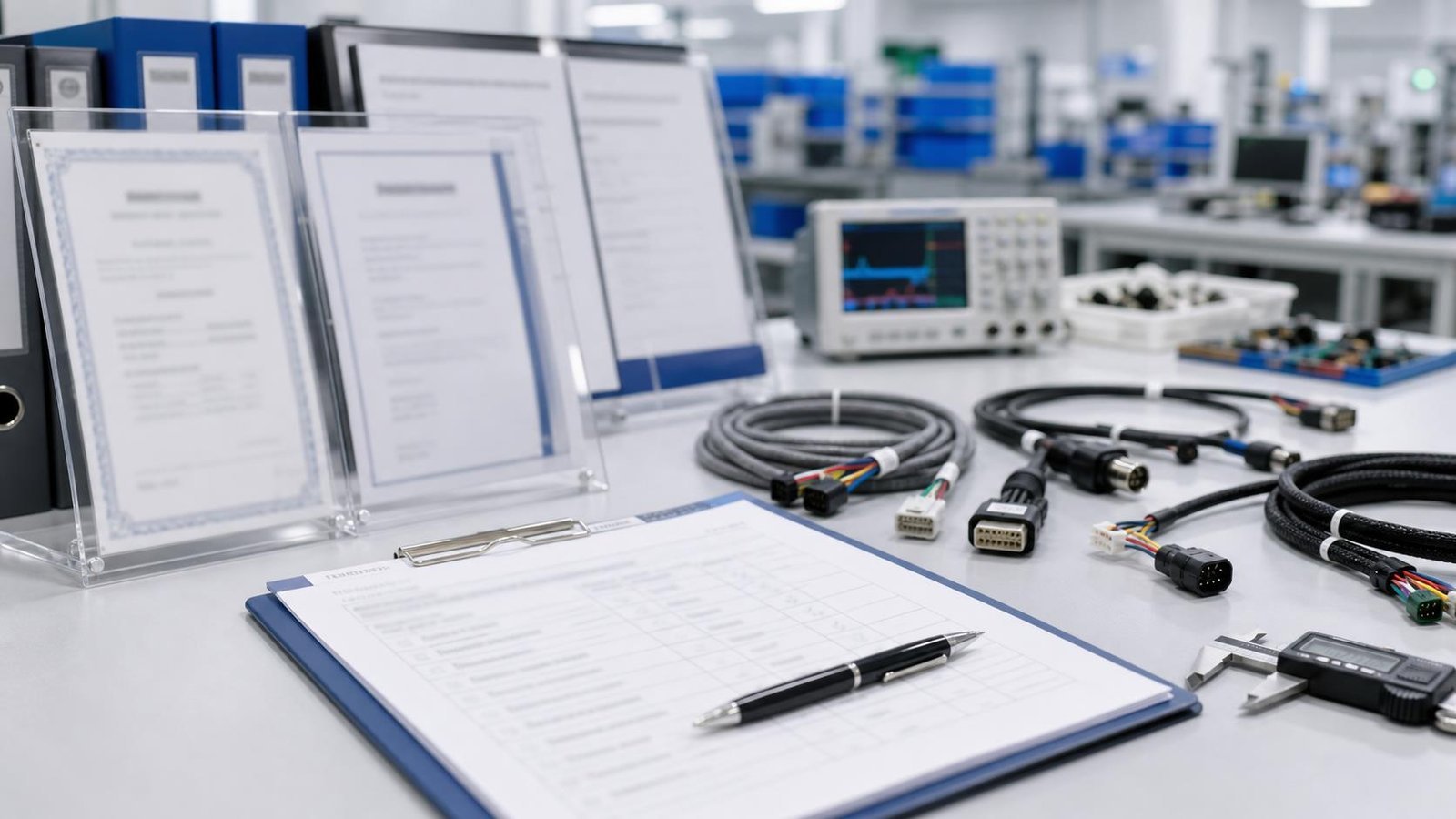
Critical Certifications & Compliance
Certifications signal the governance framework a supplier operates under. For any medical cable supplier shortlist, three compliance frameworks are non-negotiable starting points.
ISO 13485 — Quality Management for Medical Devices
ISO 13485 is the quality management system standard specific to the medical device supply chain. A supplier whose manufacturing operations are aligned to ISO 13485 requirements or manufactured to ISO 13485 standards has implemented risk-based controls covering purchasing, production, inspection, and post-market surveillance. Note that ‘certified to ISO 13485’ is a specific legal claim — only suppliers holding a current, in-scope certificate from an accredited certification body can make this statement. For suppliers who operate to the standard without a certificate, request detailed quality plan documentation and audit rights in the supplier agreement.
ISO 10993 — Biocompatibility
For cables that contact patients — ECG leads, SpO2 sensor cables, IBP transducer cables, surgical handpiece cords, neuromonitoring electrodes — ISO 10993 biocompatibility compliance is mandatory. Ask which ISO 10993 series tests have been conducted on the supplier’s standard medical cable materials. The minimum set typically includes cytotoxicity (ISO 10993-5), sensitization (ISO 10993-10), and compatibility with USP Class VI plastics. Specifications for phthalate-free, latex-free, and DEHP-free insulation compounds should be documented at raw material level with TDS and supplier declarations.
IEC 60601-1 Compatibility
IEC 60601-1 certification applies to the finished medical device, not the cable in isolation. However, a medical cable supplier experienced in designing cables for IEC 60601-1 compliant systems will understand leakage current implications for conductor sizing, insulation resistance requirements, and the distinction between patient-connected and non-patient-connected applied parts. This domain knowledge directly influences cable design decisions and avoids costly redesigns late in the development cycle.
Evaluating Manufacturing Capability & Quality Control
Certifications establish the framework; a factory audit — physical or virtual — verifies whether the framework is operational in practice. Key capability areas to probe when evaluating a medical cable supplier:
Request recent CAPA records and internal audit findings as operational indicators. An active, properly-closed CAPA system confirms the QMS is functional in practice — not just documented on paper.
MOQ, Lead Times & Sampling Policy
Commercial terms determine whether a technically qualified supplier is operationally viable for your production volumes and timelines.
Minimum Order Quantity (MOQ): Custom medical cable assembly suppliers typically set production MOQ between 50 and 500 pieces per SKU, depending on connector complexity and tooling investment. For development-stage programs, target suppliers willing to accept prototype quantities of 10-50 pieces at development pricing. Be cautious of suppliers quoting uniform MOQs across simple and complex assemblies.
Lead Times: Standard production lead times for custom medical cable assemblies from established suppliers run 3-8 weeks after golden sample approval. First-sample lead time is typically 1-2 weeks. Factor these lead times into design freeze milestones — late cable delivery is a recurring cause of development schedule slippage.
Sampling and FAI Policy: A competent medical cable supplier provides a structured First Article Inspection (FAI) report covering dimensional verification against engineering drawings, electrical test results, material certification documents, and visual inspection results against the agreed acceptance criteria. The FAI package becomes part of your DHR for regulated markets.
NRE and Tooling: Custom connector shell tooling, overmold tooling, and electrical test fixture NRE should be explicitly quoted. Tooling ownership terms should be contractually defined to avoid leverage problems at re-sourcing time.
Red Flags When Sourcing Medical Cable Suppliers
The absence of specific practices is as revealing as the presence of certifications. Watch for these warning indicators:
When shortlisting a medical cable supplier, use the framework above as a structured scorecard across quality, certifications, and commercial terms. See our medical cable solutions page for typical application requirements, our how-to-order process for a step-by-step sourcing overview, case studies for qualification examples, or contact us to submit your cable specifications.
FAQ
What certifications should a medical cable supplier have?
The baseline expectation is operations aligned to ISO 13485 standards, along with material documentation demonstrating ISO 10993 biocompatibility compliance for patient-contact cables. Suppliers should also provide RoHS 2 and REACH SVHC compliance declarations for all materials. For US-market Class II and III devices, FDA registration of the supplier facility is expected by most OEM quality teams. Always verify certificate validity against the issuing body’s public registry.
How do I evaluate a medical cable supplier without visiting the factory?
A structured remote qualification can cover: a supplier self-assessment questionnaire covering QMS scope and process controls; review of current certification documents and audit scope; a video audit of production and QC areas; review of recent CAPA records and internal audit findings; and a golden sample submission with a formal FAI report. Third-party audit firms with medical device supply chain experience can conduct on-site assessments at Chinese factories on your behalf.
What MOQ should I expect from a medical cable supplier?
For fully custom medical cable assemblies with proprietary connectors or overmolded strain reliefs, typical production MOQ ranges from 50 to 500 pieces per SKU. Development-stage quantities of 10-50 pieces per sample submission are generally available at prototype pricing from suppliers actively targeting the medical OEM market.
How long does qualifying a new medical cable supplier take?
A full supplier qualification typically spans 8-16 weeks from first contact to approved supplier status: initial capability review and questionnaire (1-2 weeks), first-sample submission and FAI review (2-4 weeks), quality system audit and non-conformance resolution (2-4 weeks), and supplier approval documentation including signed quality agreement (2-4 weeks).
Is it safe to source medical cables from a Chinese supplier?
Sourcing from Chinese cable manufacturers is standard practice among global medical device OEMs, including many major companies supplying the US and EU markets. The risk factors are manageable through structured supplier qualification, ongoing surveillance audits, and contractual quality agreements that include right-to-audit clauses, change notification obligations, and DHR documentation requirements.
What should a supplier quality agreement with a cable manufacturer include?
A supplier quality agreement (SQA) should define: inspection and testing requirements and AQL levels for each cable SKU; change notification obligations; CAPA response timelines for non-conformances; documentation retention requirements for DHR records; right-to-audit provisions; and the process for approving first articles and engineering changes. For Class II and III device programs, a signed SQA is expected by FDA QSR auditors and EU Notified Body auditors.
Further reading: ISO 13485 Medical Devices | ISO 10993 Biocompatibility | FDA Quality System Regulation