
Quick Answer: A fitness equipment coiled cable should provide comfortable movement without entering pinch points, pulling a console or placing repeated stress on connectors. Before sampling, buyers should confirm the equipment function, conductor and pinout requirements, relaxed length, normal working extension, straight-tail routing, connector retention and sample acceptance checks.
Where Are Coiled Cables Used in Fitness Equipment?
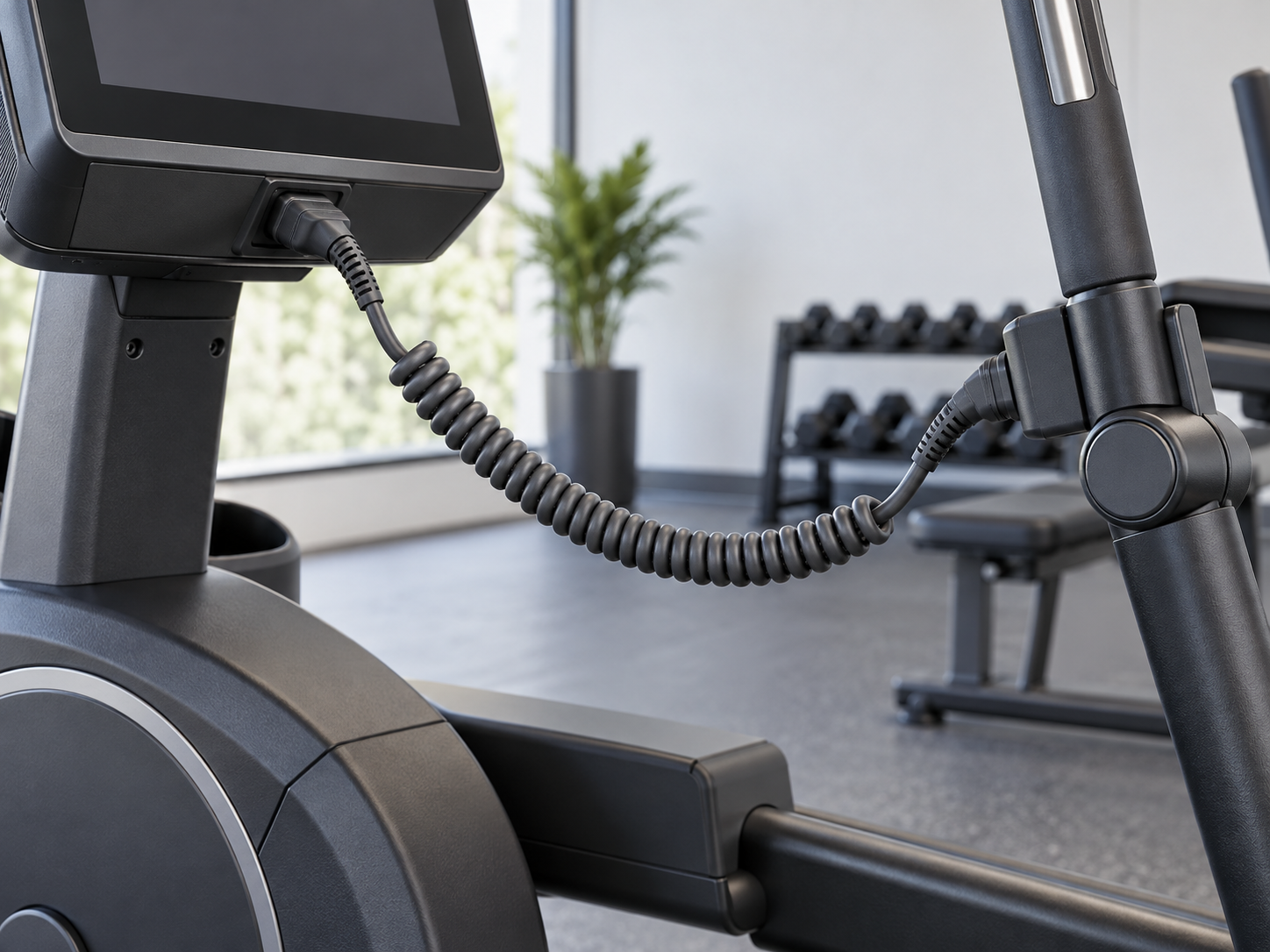
Possible applications include movable display consoles, hand controls, adjustment switches, resistance controls, safety keys, sensor connections and accessories that need temporary reach. The cable design depends on the actual circuit and movement. A simple switch lead, a multi-core control cable and a data connection should not be quoted from the same generic specification.
The buyer should identify the equipment model, control function and connection points. This helps separate the cable requirements from the complete machine requirements and avoids unsupported assumptions about electrical ratings, certifications or service life.
Specifications to Confirm Before RFQ
| RFQ item | Buyer information | Why it matters |
|---|---|---|
| Equipment function | Console, switch, sensor, hand control or accessory | Defines the circuit and movement |
| Conductors and pinout | Conductor count, gauge, voltage/current and contact assignment | Prevents wiring and connector errors |
| Relaxed length | Coil body and straight tails in the stored position | Controls routing when the machine is idle |
| Working extension | Normal operating reach between installed connection points | Avoids routine overextension |
| Connector interface | Part references, keying, retention and exit direction | Supports fit and cable routing |
| Movement path | Console travel, handle movement, hinges and pinch points | Identifies mechanical risks |
| Order information | Sample quantity, forecast, labels and packaging | Affects quotation and production planning |
Relaxed Length, Working Extension and Return Force
Specify the relaxed coil length separately from the normal working extension. The normal extension is the distance used during routine operation, not the maximum distance a sample can be pulled. If the operator repeatedly reaches a hard extension stop, the connector and cable exit may carry unnecessary load.
Return force should also match the application. A coil that retracts too strongly can move a lightweight control, make a handset uncomfortable to hold or pull a connector sideways. A weak coil may hang into the user area or fail to return to the intended storage position. Review the sample on the actual machine and use the working reach and connector-load guide to document the measurement method.
Routing Around Frames, Hinges and Moving Parts
Fitness equipment often combines fixed frames with moving consoles, arms, adjustment mechanisms or covers. The complete motion path should be checked before cable dimensions are frozen. Confirm that the relaxed coil stays clear of the floor, pulleys, hinges, sharp edges and areas where the user could catch the cable.
Straight-tail length and direction determine where the first coil begins. This can affect routing as much as the coil body itself. Provide installation photos or a simple dimensional sketch showing both connection points and the nearest moving components.
Connector, Pinout and Strain Relief
Provide connector manufacturer and part references when available. If the connector is customer-specific, include clear mating-interface photos, key dimensions and a pin-to-pin table. Confirm whether the assembly needs a latch, locking feature, overmold or separate strain relief.
The sample should be inspected while the console or hand control moves through its normal range. The cable exit should not bend sharply against the enclosure, and the first coil should not rub repeatedly against the connector body. Use the strain relief and overmolding checklist before approving the termination design.
Fitness Equipment Cable Sample Approval
- Verify pin-to-pin continuity against the approved drawing.
- Confirm conductor assignments, connector keying and mating fit.
- Measure relaxed length, working extension and both straight tails.
- Operate the console, switch or hand control through the intended movement.
- Check that return force does not pull the control out of position.
- Inspect routing around frames, hinges, covers and pinch points.
- Review cable exits and strain relief under normal movement.
- Confirm identification, labels and packaging requirements.
Common Problems Buyers Should Prevent
- The coil is specified from maximum stretch instead of normal working reach.
- The relaxed cable hangs into the user or machine movement area.
- Return force makes the console or hand control uncomfortable to use.
- The first coil starts too close to a connector or enclosure edge.
- Pinout is copied from an old sample without confirming the current equipment revision.
- The cable is approved on a bench but not on the complete fitness machine.
- Packaging compresses the coil or mixes equipment variants and labels.
Buyer Checklist
- Fitness equipment model and cable function
- Voltage, current, signal and conductor requirements
- Connector references and approved pinout
- Relaxed length, normal extension and straight tails
- Mounting points, movement path and pinch-point information
- Jacket color, marking and packaging requirements
- Sample quantity, annual demand and target schedule
What to Send in the RFQ
Send the cable drawing, equipment and connector photos, pinout, relaxed storage dimensions, normal working extension and sample quantity. If the drawing is not ready, provide a current sample or clear photos with the required function and movement. The missing specification questions can then be reviewed before quotation.
Review the fitness equipment coiled cable product page, compare the full custom TPU coiled cable range, or upload drawings and RFQ requirements.